
Fixing Drain Pump Issues in Different Washer Brands
How to Fix Drain Pump Issues in Different Washer Brands
Washers rely on drain pumps to remove water from the drum after a wash cycle. When the pump fails, water may not drain properly, leaving clothes soaked and causing error codes to appear. Safety tips should always be followed when working with electrical components to avoid injury or damage. This guide will walk you through diagnosing and fixing drain pump problems across different washer brands.
Common Signs of a Faulty Drain Pump
Before replacing or repairing the drain pump, check for these signs:
- Water remains in the washer after a cycle – If your washer finishes a cycle but leaves a pool of water behind, the drain pump may not be working properly.
- Washer stops mid-cycle with an error code – Many modern washers will detect drainage issues and shut down to prevent further damage, often displaying an error code related to drainage failure.
- Unusual noises (humming, grinding) from the pump area – A humming noise typically means the pump is receiving power but is jammed. Grinding sounds can indicate a failing impeller.
- Slow drainage or frequent draining interruptions – If your washer takes much longer than usual to remove water or stops and starts repeatedly, the pump may be struggling due to a clog or wear.
These signs point to a drain pump problem, but further diagnosis is needed to confirm whether the issue is a clog, electrical failure, or mechanical wear.
Diagnosing the Problem
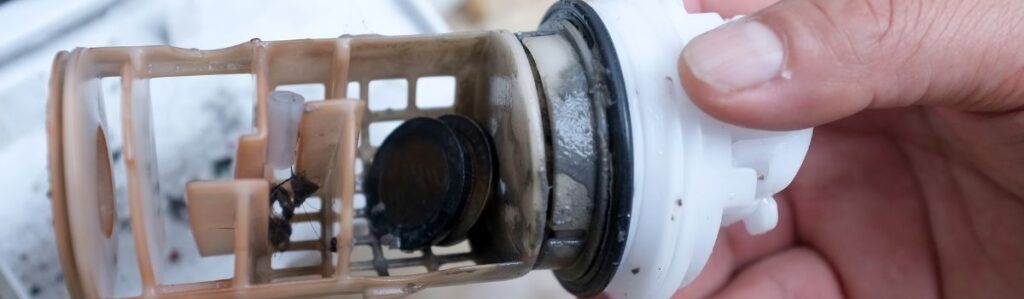
- Check for Clogs – Start with the simplest possibility. Remove the pump filter usually found behind a small access panel near the bottom front of the washer. Be ready with a towel; trapped water may spill out. Clear out any lint, coins, or debris. Next, inspect the drain hose for kinks or obstructions. Blow through it or run water through it to confirm it’s clear.
- Listen for Noises – Turn the washer to a drain cycle and listen. A low humming means the pump is trying to work but could be jammed. Grinding or rattling suggests foreign objects inside. Silence could indicate a dead motor or lack of power.
- Test for Power – Unplug the washer, remove the pump’s electrical connector, and use a multimeter to measure voltage across the terminals while running a drain cycle. If there’s no power, the issue may be with the control board or wiring, not the pump itself.
- Inspect the Impeller – The impeller is the small plastic blade inside the pump that moves water. If it’s cracked, loose, or doesn’t spin freely, it won’t create enough suction. Remove the pump cover and try spinning it manually. If it sticks or wobbles, the pump should be replaced.
Completing these steps will confirm whether cleaning, repairing, or replacing the drain pump is necessary. If the pump has power but doesn’t work, it’s time for a new one.
Brand-Specific Drain Pump Issues and Solutions
Whirlpool, Maytag, and Amana Washers
These brands often share similar drain pumps.
Common Problems: Clogs in the pump filter or failure of the pump motor.
Fix:
- Check for debris in the drain pump filter.
- Use a multimeter to confirm electrical continuity in the pump motor.
- Replace the pump if there’s no continuity or if grinding noises persist.
LG and Samsung Washers
Feature self-diagnosing error codes for drain issues.
Common Problems: Pump blockage, faulty sensor, or electronic failure.
Fix:
- Locate and clean the drain filter (usually at the front bottom panel).
- Check for an obstruction in the pump housing.
- Reset the washer and run a diagnostic cycle to confirm proper draining.
GE and Hotpoint Washers
These models may develop worn-out drain pumps over time.
Common Problems: Weak drainage, buzzing noises, or complete failure.
Fix:
- Remove the drain pump and check for any objects obstructing the impeller.
- Replace the pump if it fails a multimeter test.
Bosch and European Washer Brands
Typically have compact pumps that are prone to small clogs.
Common Problems: Blocked drain hose or a stuck impeller.
Fix:
- Disconnect and inspect the drain hose for clogs.
- Manually spin the impeller to check for obstructions.
- Replace the pump if it doesn’t turn freely or shows electrical failure.
Steps to Replace a Washer Drain Pump
If troubleshooting points to a failed drain pump, follow this general replacement guide:
Unplug the Washer – Safety first. Cut the power before touching anything electrical.
Turn Off Water Supply – Close the water valves to avoid leaks when disconnecting hoses.
Access the Pump
- Front-load washers: Remove the front or rear panel (varies by model).
- Top-load washers: Usually accessed from the bottom or rear. Lay the washer down if needed.
Remove the Pump
- Loosen the clamps and detach the drain hoses. Some water may spill—have towels ready.
- Unplug the electrical connectors.
- Unscrew or unclip the pump from its mounting brackets.
Install the New Pump
- Position the new pump and secure it in place.
- Reconnect electrical plugs and hoses, making sure clamps are snug to prevent leaks.
Reassemble the Washer – Put panels back on, tighten screws, and restore power.
Test Drainage – Run a short cycle to confirm the new pump is working properly. Look for leaks and listen for unusual sounds.
If everything checks out, you’re good to go. If drainage issues persist, double-check hose connections or troubleshoot for further blockages.
Preventing Future Drain Pump Issues
Drain pump failures often result from avoidable problems like clogs, blockages, and excess wear. Preventative maintenance keeps your washer running smoothly and helps prevent unexpected breakdowns. Follow these steps to keep your drain pump in top condition:
Regular Maintenance Tips
- Clean the Drain Filter Regularly
Most front-load and high-efficiency washers have a drain filter, usually behind a small panel at the lower front of the machine. Check it every few months and remove lint, debris, and small objects. - Inspect the Drain Hose Yearly
A kinked or partially clogged drain hose can slow water flow and strain the pump. Once a year, disconnect the hose, flush it with water, and check for obstructions.
Best Practices for Everyday Use
- Mind What You Wash
Loose items like coins, screws, or hairpins can jam the pump impeller. Always check pockets before starting a cycle. - Use the Right Detergent and Amount
Excess detergent, especially in high-efficiency machine,s can create buildup, leading to clogs in the pump and hoses. Use the manufacturer-recommended type and quantity.
Identifying Early Warning Signs
- Listen for Unusual Noises or Slow-draining
If your washer starts draining slower than usual or makes odd noises, address the issue right away before it worsens.
By following these simple preventative steps, you can extend the life of your washer’s drain pump and reduce the need for costly repairs or replacements.
Final Thoughts
A faulty drain pump doesn’t have to mean the end for your washer. In most cases, a clog, obstruction, or minor electrical issue is the real culprit. By methodically diagnosing the problem checking for blockages, testing the pump’s power, and inspecting the impeller you can determine whether a simple fix or a full replacement is necessary.
Each washer brand has its quirks, but the fundamentals remain the same: if water isn’t draining, the pump is either jammed, weak, or dead. Cleaning the drain filter regularly and being mindful of what goes in the wash can extend the pump’s lifespan. But if replacement is unavoidable, swapping out the pump is a straightforward job with the right tools and patience.
Don’t let a broken drain pump take your washer out of commission troubleshoot, fix, and get back to clean laundry.