
Stove Repair Services

24 -Hours Emergency Services

Satisfaction
Guaranteed

Same day service

Fast and reliable
Trusted Appliance Repair Across the Lower Mainland
See why local homeowners choose ElectraFix for fast, reliable appliance repairs.


Stove, Oven and Range Repair Services

ElectraFix repairs gas ranges, electric ranges, induction cooktops, dual-fuel ranges, wall ovens, and slide-in models across the Lower Mainland. We carry OEM parts from the original manufacturer on the service vehicle for the most common faults and complete the majority of stove and oven calls on the first visit. All repairs include a written quote before any work starts, and the diagnostic fee is credited against the repair if you proceed. Call (778) 941-7758 for same-day or next-day availability.
One thing worth stating upfront: if you smell gas near your stove or range and the burners are off, do not call us first. Turn off the gas supply at the shutoff valve behind the appliance, open windows, and leave the building. Call FortisBC at 1-800-663-9911. That call takes priority over every appliance repair call we receive.
Before You Call
Circuit breaker and power supply. An electric range requires a dedicated 240V double-pole breaker. Before calling, check the breaker panel and confirm the breaker has not tripped. A partially tripped breaker can cut power to the oven while leaving the clock on, which is a common cause of “oven not heating” calls that resolve without a technician.
Gas supply valve. The shutoff valve on the gas line behind the range should be parallel to the pipe when open. After a move or a service visit from a gas company technician, it sometimes gets left at an angle. Check it before calling about a gas range that will not light.
Element visual check. On an electric range, remove the surface element, examine it for blistering, cracks, or burn marks, and reseat it firmly in the socket. A loose connection mimics element failure. If you see physical damage, the element needs replacing, which is a straightforward repair we carry stock for on most brands.
Common Stove, Oven and Range Problems We Fix
Stove Burner Won't Ignite
On a gas range, the igniter system includes a spark module, spark electrode, and electrode wire for each burner. When a single burner fails to ignite and others work normally, the electrode or its wire for that burner is the most likely cause. When all burners fail to spark simultaneously, the spark module has failed. A wet or food-contaminated electrode can also prevent ignition. After cleaning the burner cap and electrode with a dry cloth, try again before calling. If the issue persists, the electrode or module needs replacing.
On an electric range, a surface element that will not heat can have a failed element, a failed surface element switch, or a failed element socket. Surface element switches control voltage to the coil elements and can be tested with a multimeter for continuity across all positions. Radiant surface elements on glass-ceramic cooktops burn out like a light bulb and are typically replaced as a unit.
Gas Clicking Constantly When Burner Is Off
Continuous clicking when all burners are off is caused by moisture or food debris in the igniter cap or electrode area. The spark switch is not at fault. Remove the burner cap, dry it thoroughly, and clean around the electrode port with a dry brush. If the clicking stops, moisture was the cause. If it continues, the spark switch for that burner has failed and needs replacing. Each burner has its own switch, which can be tested independently.
Uneven or Yellow Flame on Gas Burner
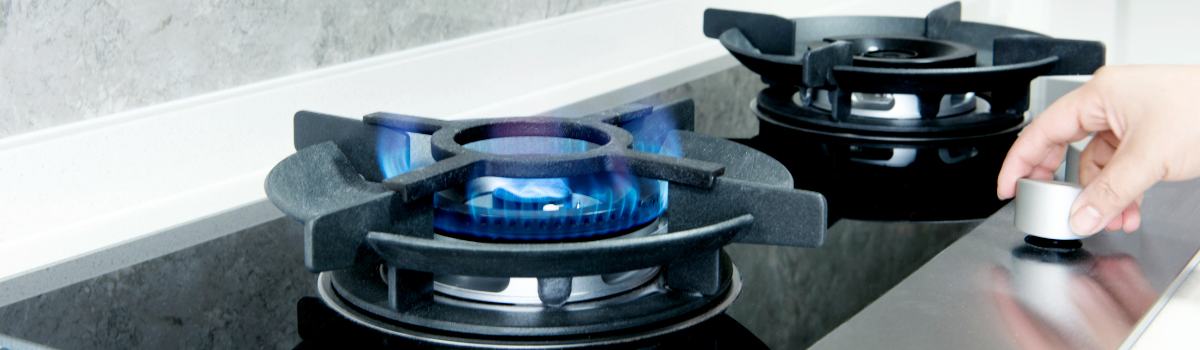
A properly burning gas flame is blue with a small darker cone at the centre. A yellow or orange flame indicates incomplete combustion, typically caused by a clogged burner orifice, a misaligned burner cap, or low gas pressure. This is not a cosmetic issue. Incomplete combustion produces carbon monoxide. We do not recommend operating a range with a persistently yellow flame until the cause has been identified. A licensed gas technician must diagnose gas pressure issues. We carry certifications for gas appliance work in BC.
Electric Element Not Heating, Consistent or Partial
When an electric element heats unevenly or only partially, the element itself is the first thing to check. Radiant elements on glass-ceramic cooktops can fail in sections, producing hot spots on one side only. A coil element that is partially glowing indicates a break in the element. An element that is not glowing at all but the socket shows voltage points to an open circuit in the element. We carry replacement elements for the most common Samsung, LG, Whirlpool, GE, Bosch, and KitchenAid models on the service vehicle.
Induction Cooktop Not Working or Showing Error Codes
Induction cooktops are significantly more sensitive than gas or electric. They require compatible magnetic cookware and will not activate with aluminum, copper, or glass pots. Before calling, place a magnet on the bottom of the cookware. If the magnet does not stick, the cookware is not induction-compatible and no repair is needed.
If the cookware is compatible and the cooktop is still not activating, the most common causes are a failed control board, a blown thermal fuse from overheating, or a faulty induction coil. Error codes on induction cooktops are brand-specific. We carry reference data for Samsung, Bosch, LG, and KitchenAid induction error codes and diagnose from the code before any disassembly.
Oven Not Heating
This is the most common oven service call we receive. On an electric oven, the bake element is the first component to inspect. Remove it and look for visible blistering, burn marks, or holes. A failed bake element usually shows physical damage and can be replaced in under an hour. If the bake element is intact, the thermal fuse, relay board, or control board are the next points of diagnosis.
On a gas oven, the igniter is the primary suspect when the oven will not heat. The gas oven igniter must reach sufficient temperature to open the gas safety valve before gas flows. A weak igniter glows but takes longer than 90 seconds to open the valve. The oven appears to light slowly or sometimes fails to light at all. Igniters weaken gradually and are worth replacing before a full failure leaves you without an oven during a busy week.
Oven Won't Turn On
An oven that is completely unresponsive with a blank display points to a failed thermal fuse, a failed control board, or a power supply issue. The thermal fuse is a single-use safety device that opens permanently when the oven overheats. It does not reset. Once it blows, the oven will not power on until the fuse is replaced. This is a common failure on ovens that have been run through multiple self-cleaning cycles. After the fuse is replaced, we recommend avoiding self-cleaning cycles going forward. See the self-cleaning section below for the reason.
Relay board failure and main control board failure produce similar symptoms to a blown thermal fuse. We test all three before ordering parts.
Oven Door Locked After Self-Clean
The self-cleaning cycle runs the oven cavity at approximately 500°C. At this temperature, the door lock motor engages automatically. After the cycle ends and the oven cools, the lock should disengage. When it does not, the cause is typically a failed door lock motor, a faulty door switch that is preventing the control board from registering the door as closed, or a control board that has not received the correct signal to release the lock.
On some models, particularly older Kenmore and certain Fulgor Milano ranges, the thermal fuses that protect the lock motor are non-resettable. If the fuse has blown during the self-clean cycle, the door will remain locked until the fuse is replaced. We carry thermal fuses for the most common configurations.
Do not force the door open. Forcing a locked oven door will damage the door latch mechanism and add cost to the repair.
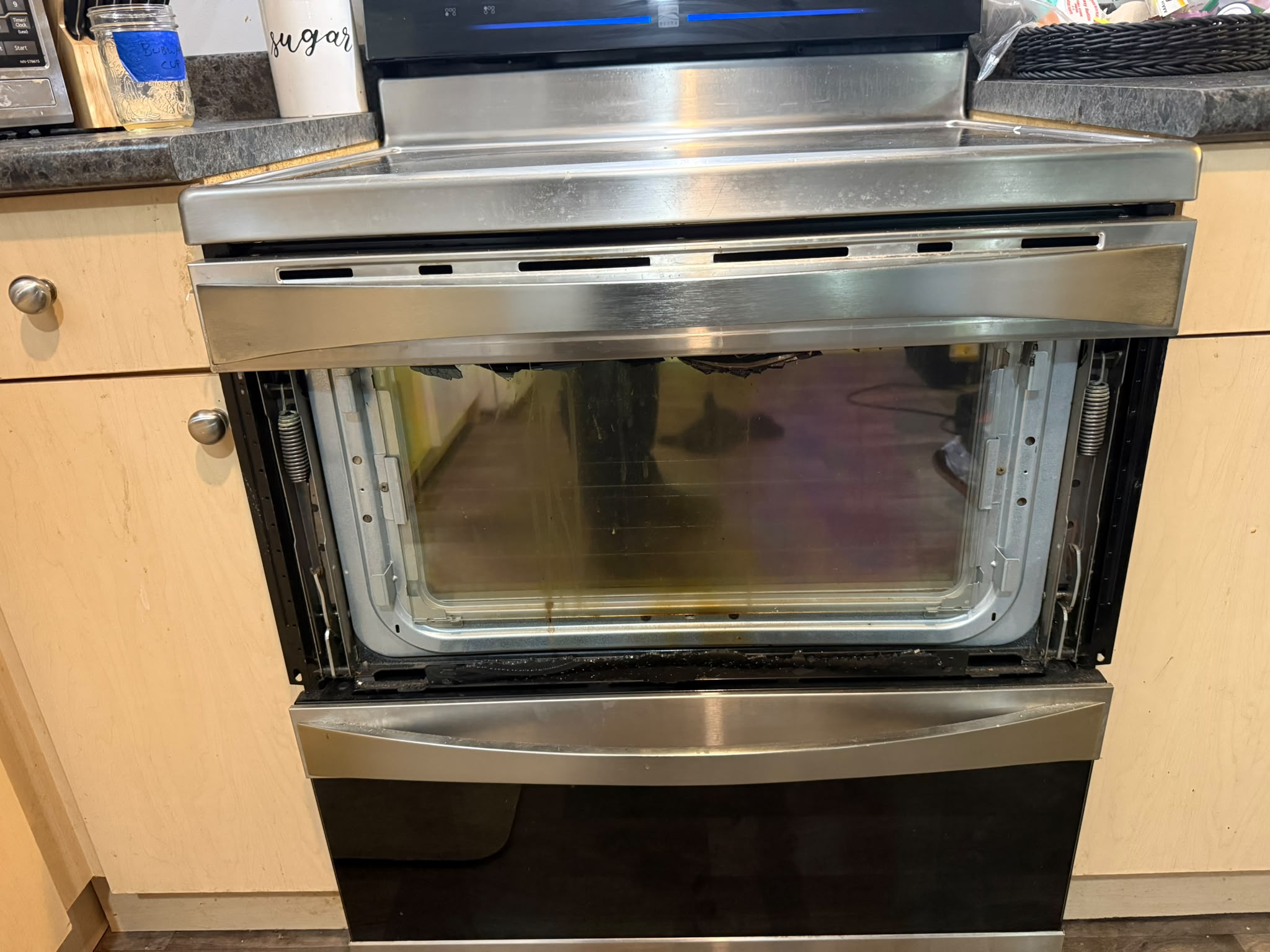
Oven Convection Fan Won't Turn Off
A convection fan that continues running after the oven has been switched off is typically caused by a faulty control board or a temperature sensor that is sending an incorrect reading. The oven’s control logic runs the fan until it detects that the cavity has cooled below a threshold temperature. If the sensor reads incorrectly high, the fan never receives the signal to stop. Test the sensor first. If the sensor is within the correct resistance range, the control board is the likely cause.
If You Smell Gas Near the Stove
If you smell gas and no burner is lit:
- Do not turn any switches on or off, including light switches
- Do not use your phone inside the building
- Turn off the gas shutoff valve behind the range
- Open doors and windows
- Leave the building
- Call FortisBC from outside at 1-800-663-9911
A gas smell with burners off indicates a supply line leak, a valve seat leak, or a cracked burner orifice. None of these are cases where a repair visit is the first step. Once FortisBC has confirmed the building is safe and identified the source, call us for the appliance repair component of the fix.
We hold BC gas appliance certifications and can legally perform gas appliance repairs in British Columbia. Not every appliance repair company can say the same. Ask any technician you book whether they are licensed for gas work in BC before they touch your range.
Self-Cleaning Oven Cycles - What They Do to the Appliance
Self-cleaning cycles run the oven at 450°C to 500°C. Standard cooking temperatures are 175°C to 230°C. The thermal stress on every component in the oven at twice the normal operating temperature is significant.
Within 48 hours of a self-cleaning cycle, we consistently see an increase in service calls for three specific failures: blown thermal fuses, failed door hinges, and failed control boards. All three are directly attributable to the heat generated by the self-clean cycle. The thermal fuse is designed to blow at a set temperature to protect the control board. When the oven runs to 500°C, the fuse is working at or near its rated limit. One cycle can take years off its service life. Two or three cycles often blow it entirely.
The door hinge failure pattern is similar. Hinges are rated for cooking temperatures. Self-cleaning temperatures warp hinge components over time, eventually causing door alignment issues and poor sealing that affects oven performance at normal temperatures.
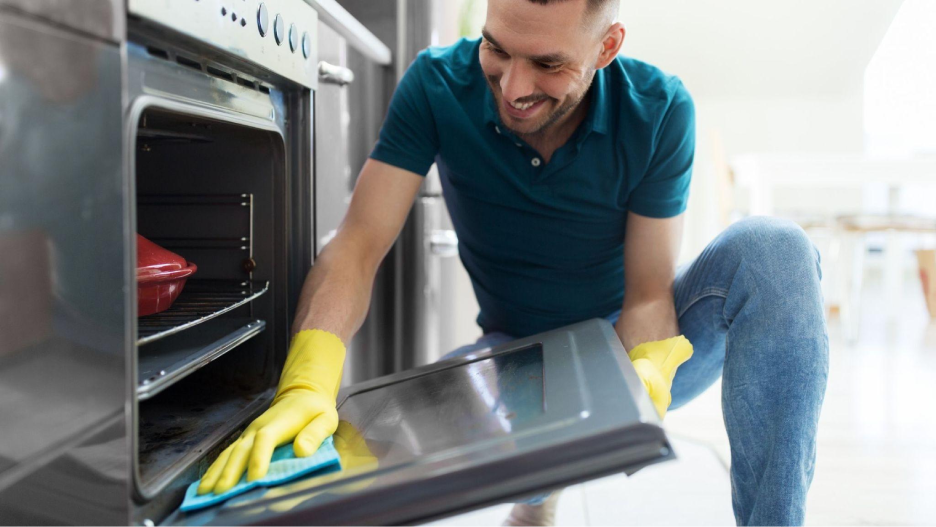
The alternative is manual cleaning with a damp cloth, baking soda paste, and heat from a normal cooking cycle to soften baked-on residue. It takes longer than 20 minutes and it does not damage any components.
We have a dedicated article on this: 6 Reasons Why Not to Use the Self-Cleaning Oven Feature — it covers each failure mode in detail.
Stove, Oven and Range Types We Service
Gas Ranges and Cooktops
Gas freestanding ranges are the most common configuration in Lower Mainland homes and the most straightforward to service. Parts availability for all major brands is strong, and most gas range repairs complete on the first visit. We are licensed for gas appliance work in BC, which is required by Technical Safety BC for any gas appliance repair involving gas supply components, valves, or igniters connected to the gas line.
Electric Ranges and Ceramic Cooktops
Electric coil ranges are the simplest configuration to repair. Parts are universal across many brands and repair costs are typically the lowest of any range type. Glass-ceramic smooth-top ranges have fewer moving parts than coil ranges but a cracked glass cooktop is almost always a replacement-level event. Cooktop glass typically costs $200 to $500 for the glass panel alone, and the repair cost approaches or exceeds the value of the appliance on ranges older than eight years. We will tell you clearly if this is the case before any work starts.
Induction Cooktops
Induction cooktops transfer heat through a magnetic field rather than a heating element or gas flame. They are more energy-efficient than gas or electric but carry higher repair costs because the components, particularly induction coils and control boards, are more expensive. We service all major induction brands including Bosch, Samsung, LG, KitchenAid, and Miele.
Dual-Fuel Ranges
Dual-fuel ranges combine a gas cooktop with an electric oven. The gas and electric systems are independent and can fail independently. A dual-fuel range with a gas top that sparks correctly but an oven that will not heat is typically an electric oven fault, not a gas fault. We diagnose both systems on the same visit.
Wall Ovens - Single and Double
Wall ovens require the surrounding trim kit or cabinet panel to be removed for full service access, which adds labour time compared with a freestanding range. Double wall ovens require diagnosis of both cavities independently. We service all major wall oven configurations including single electric, single gas, double electric, and combination microwave-wall oven units from Bosch, Miele, KitchenAid, GE, Samsung, LG, Whirlpool, Thermador, and Sub-Zero Wolf.
Slide-In and Drop-In Ranges
Slide-in ranges fit flush with the surrounding countertop and lack a back control panel. Service access to the control board requires pulling the range forward from the cabinet, which adds time but does not affect the repair itself. Drop-in cooktops require unclipping from the countertop cutout before removal. Both configurations are serviced by ElectraFix without issue.
Oven, Stove, and Range Repair Frequently Asked Questions
STOVE BURNER WON'T TURN ON
If one or more of the surface elements won’t turn on or won’t turn off the problem is either with the surface element or with the switch – in both cases it is an easy appliance service repair and can be performed in less than an hour.
- Surface Element Switch: The surface element switch controls power to the surface element coil. Try switching the elements around if possible. If the new element doesn’t work then you likely have a malfunctioning surface element switch.
- Surface Element Board: The surface element board regulates the supply of power to the stove burners. The surface board can contain one, or several relays. If any of them fail the entire board can malfunction. The surface board should be tested with a multimeter for continuity.
- Coil Surface Element: Make sure that your coil surface element is pushed fully into its socket. Look for signs of damage on the element and connections. Test the coil surface element with a multimeter for continuity.
- Radiant Surface Element: The radiant surface element is the heating element itself and it can burn out just like a light bulb. It can be tested with a multimeter.
OVEN NOT HEATING
A not heating oven is the most common repair service problem. The causes of this appliance malfunction could be a burned fuse or a faulty relay board. There are cases where the main control board may be the reason for a not heating oven. If it is a gas oven most of the time the problem is with the igniter.
- Igniter: The igniter is responsible for most of the repairs problems for ovens, not heating. Watch the igniter when the oven is on. If the igniter glows for more than 1 minute without igniting the gas into a flame it most likely means the igniter is too weak to open the safety valve and probably needs replacement. If there is no glow at all the igniter can be tested with a multimeter and replaced if necessary.
- Bake and Broil Elements: The bake and broil elements should be able to glow “red hot”. If it can’t the oven will not heat properly. Inspect the elements for cracks and holes. They can be tested with a multimeter for continuity.
- Spark Electrode The spark electrode ignites gas for baking and broiling purposes. It sits next to the burner. You can inspect the porcelain housing and the tip of the electrode for damage. Pro Tip: A proper ground and correct polarity of the incoming voltage is required for the spark electrode to function correctly so these need to be checked as a possible source of the appliance problem.
OVEN TEMPERATURE NOT ACCURATE
A common oven repair problem is not keeping the proper temperature or not reaching it. The issue is probably with the temperature control thermostat. Sometimes a temperature sensor might be faulty, causing the temperature to be not accurate in the oven. A defective control board is one of the reasons for this oven repair problem as well.
- Bake and Broil Elements: Usually, the bake and broil elements need to be replaced. They wear out over time. Inspect them for cracks and holes. They can be tested with a multimeter for continuity.
- Igniter: The igniter weakens over time. It can be tested with a multimeter for continuity.
- Temperature Control Thermostat: This thermostat monitors the temperature inside the oven. A temperature control thermostat is a complex unit that is difficult to test. Our repair technicians have the experience to determine if this is the cause of your oven not heating.
- Oven Sensor:The oven sensor helps regulate the temperature inside the oven by varying its electrical resistance. On some oven models, you can recalibrate the oven control sensor. Refer to your owner’s manual for instruction.
OVEN WON'T TURN ON
If the oven won’t turn on due to a faulty thermal fuse that trips, if the oven overheats, if it is blown the oven won’t turn on at all. One of the relays on the relay control might be faulty as well, in that case, a new board is required. A faulty main control board is a common cause as well.
- Bake and Broil Elements: These main elements can burn out over time. They can crack and get holes. Inspect them for damage.
- Igniter: Igniters are the number one cause of an oven not turning on. Igniters open the safety valve and heat up to ignite the gas in the burner assembly. It can be tested with a multimeter for continuity and replaced if necessary.
- Spark Electrode: The spark electrode ignites the gas for baking and broiling. It can break or wear out over time. Inspect for signs of damage.
RANGE BURNERS SPARK ALL THE TIME
In this stove repair issue are a few main culprits, and most likely, it’s the spark ignition switch. Each element has a spark ignition switch. Check the spark ignition switches with a multimeter at all positions to test for continuity.
OVEN FAN DOES NOT TURN OFF
If your ovens fan is constantly running, it is most likely an issue with the oven control board or a thermostat.
OVEN DOOR LOCKED
If the oven door is locked (usually after self-cleaning), the problem in most cases is with the door switch, and it needs to be replaced. Sometimes a faulty main control board is the reason for the door being locked.
Brands We Service
We repair all major stove, oven, and range brands across the Lower Mainland including Samsung, LG, Whirlpool, Maytag, Frigidaire, GE, KitchenAid, Bosch, Miele, Sub-Zero Wolf, Liebherr, Thermador, Jenn-Air, Fisher and Paykel, Electrolux, Kenmore, Amana, Blomberg, Dacor, Viking, Bertazzoni, and more. OEM parts are stocked on the service vehicle for the most common faults across all standard brands. Premium and specialty brand parts may require a sourcing lead time, which we confirm before booking the repair visit.


Articles you may find interesting:
ElectraFix Appliance Repair
Book your stove or oven repair-call (778) 941-7758
- ✓ Same-day service availability
- ✓ Written quote before any work starts
- ✓ Diagnostic fee credited against the repair if you proceed