
Easy Ways to Fix Refrigerator Temperature Problems in Kelowna
Maintaining the proper temperature in your refrigerator is crucial for preserving food quality and safety. When the temperature is too high, perishable items can spoil quickly, leading to food waste and potential health risks. Conversely, if the temperature is too low, some foods may freeze and lose their texture and flavor.
Several common issues can cause refrigerator temperature problems. These include faulty thermostat settings, blocked vents, dirty condenser coils, or issues with the door seal. Sometimes, external factors like frequent door openings or placing hot food inside can also affect the temperature balance.
This article covers quick fixes that you can try yourself to resolve temperature problems in your refrigerator near Kelowna. Simple steps like adjusting the thermostat, cleaning coils, or ensuring proper airflow can often restore the correct temperature. However, if these solutions don’t work or you notice persistent issues, it is advisable to call a professional technician to diagnose and repair more complex problems, including refrigerator drain clog services.
Understanding Refrigerator Temperature Issues
Common Symptoms of Temperature Problems
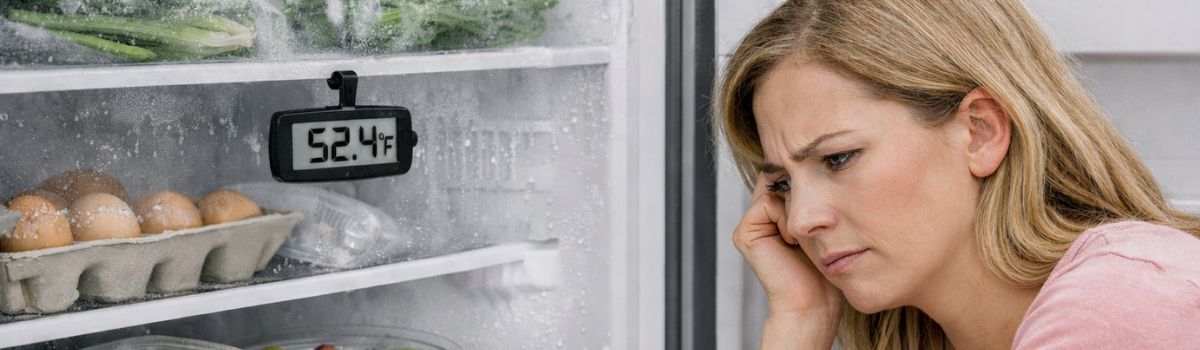
One of the first signs that your refrigerator may be experiencing temperature issues is if it is running too warm or too cold. When the fridge is too warm, food can spoil faster than usual, which can lead to waste and potential health risks. Conversely, if the fridge is too cold, some items may freeze unexpectedly, affecting their texture and taste. Another symptom is ice buildup or frost in the freezer, which can indicate that the appliance is struggling to maintain the correct temperature.
Common Causes of Temperature Problems
Several factors can cause temperature problems in refrigerators. Dirty condenser coils are a frequent culprit; when these coils are covered in dust or grime, they can’t efficiently release heat, leading to temperature fluctuations. Faulty thermostat settings can also cause the fridge to run improperly if the temperature controls are set too high or too low.
Compressor issues may prevent the refrigerator from cooling effectively, as the compressor is responsible for circulating refrigerant through the system. Door seal problems, such as worn or damaged gaskets, allow warm air to enter the fridge, disrupting the internal temperature. Lastly, blocked or restricted airflow inside the refrigerator can prevent cool air from circulating evenly, leading to inconsistent temperatures.
Step-by-Step Troubleshooting and Quick Fixes
1. Diagnosing Cooling Problems
To determine if your refrigerator is cooling properly, start by checking the internal temperature. Use a refrigerator thermometer to measure the temperature inside both the fridge and freezer compartments. The fridge should be between 37°F and 40°F (3°C to 4°C), while the freezer should be at 0°F (-18°C). If temperatures are outside these ranges, cooling issues may be present. Also, listen for the compressor running and check for any unusual noises. Basic tools needed for diagnostics include a refrigerator thermometer, a multimeter (for electrical testing), and a flashlight.
2. Cleaning and Maintenance
Regular cleaning is essential for refrigerator efficiency. Dust and debris on condenser coils reduce cooling performance. Locate the coils, usually at the back or underneath the unit, and clean them using a coil brush or vacuum to remove dust buildup.
Additionally, ensure that vents inside the refrigerator are not blocked by food items. Blocked vents restrict airflow and cause uneven cooling. Clear any obstructions to maintain proper air circulation.
3. Checking and Adjusting Thermostat Settings
Locate the thermostat inside your refrigerator, often found near the control panel or inside the fridge compartment. Adjust the thermostat to the recommended temperature range: 37°F to 40°F for the refrigerator and 0°F for the freezer. If the thermostat is set too high or too low, it can cause cooling problems. Refer to your refrigerator’s manual for specific instructions on adjusting the thermostat.
4. Inspecting Door Seals and Gaskets
Check the door seals and gaskets for any cracks, tears, or gaps that could let cold air escape. A simple way to test seals is to close the door on a piece of paper or a dollar bill; if it slides out easily without resistance, the seal may be faulty. Clean gaskets regularly with warm, soapy water to remove dirt and grime, which can affect their sealing ability. Replace damaged gaskets to ensure the door closes tightly and maintains an efficient seal.
5. Ensuring Proper Refrigerator Placement
Make sure your refrigerator is level by using a spirit level. An unlevel fridge can cause the doors not to close properly and affect compressor operation. Adjust the leveling feet as needed. Also, provide adequate clearance around the refrigerator typically at least 2 inches on the sides and back to allow proper ventilation and heat dissipation, which is crucial for efficient cooling.
6. Compressor and Mechanical Issues
Listen for unusual sounds or absence of sound from the compressor, which could indicate mechanical failure. If the compressor does not run or runs continuously without cooling, it may be faulty. Compressor issues often require the expertise of a professional repair technician. If you suspect compressor failure or other mechanical problems after completing basic troubleshooting, contact a qualified professional for diagnosis and repair.
Conclusion
To quickly address refrigerator temperature problems, start by checking the thermostat settings, cleaning the condenser coils, ensuring proper door seals, and avoiding overloading the fridge. These simple steps often resolve common cooling issues and help maintain consistent temperatures. Regular upkeep, such as routine cleaning and timely inspections, is essential to prevent future problems and extend the lifespan of your appliance.
If these quick fixes do not solve the issue, professional help is readily available near Kelowna. Local experts can provide thorough diagnostics and repairs to ensure your refrigerator operates efficiently. For persistent or complex problems, consulting a qualified technician is the best course of action to avoid further damage and costly repairs.