
Advanced Sensor Calibration Techniques for Dishwasher Error Codes in Nanaimo
Sensor calibration plays a crucial role in the efficient operation of modern dishwashers, including proper pressure switch testing. These appliances rely on various sensors to monitor water temperature, soil levels, and cycle progress to ensure optimal cleaning performance. When sensors are not properly calibrated, the dishwasher may display error codes that hinder its functionality.
Common challenges related to sensor error codes include false alarms, interrupted cycles, and inaccurate readings that can lead to wasted water and energy. These issues often confuse users and make troubleshooting difficult without proper technical knowledge.
Timely repair and calibration of dishwasher sensors are vital for maintaining the appliance’s performance and extending its lifespan. Addressing sensor errors promptly helps avoid more serious mechanical problems, reduces repair costs, and ensures that the dishwasher operates efficiently, saving both time and resources.
Understanding Dishwasher Error Codes
Overview of Common Error Codes in Dishwashers
Dishwasher error codes serve as crucial diagnostic tools that help identify specific malfunctions within the appliance. These codes are typically displayed on the dishwasher’s control panel, allowing users and technicians to pinpoint issues quickly without extensive troubleshooting. While the exact codes and their meanings can vary somewhat between brands, many errors correspond to similar problems such as sensor faults, door lock issues, water inlet problems, and heating element failures. Understanding these codes is essential for effective repairs and maintenance.
Detailed Analysis of Error Codes Related to Sensors and Calibration
Temperature Sensor Faults
Common error codes related to temperature sensor malfunctions include E3 on Gaggenau dishwashers, tE on LG models, and F51 on Amana units. These errors often arise when the temperature sensor fails to accurately detect the water temperature, causing the dishwasher to either overheat or underheat the wash cycle. Symptoms include incomplete cleaning, extended cycle times, or the dishwasher stopping mid-cycle. Causes may include a faulty sensor, wiring issues, or calibration problems.
Door Lock and Door Sensor Errors
Errors such as E4 on Gaggenau and E49 on Arçelik dishwashers indicate problems with the door lock or door sensor. These sensors ensure the dishwasher door is securely closed before operation begins, which is critical for both safety and proper functioning. If these sensors detect an open or improperly locked door, the dishwasher will not start or will halt mid-cycle to prevent water leakage or electrical hazards.
Water Inlet and Overflow Errors
Water-related sensor errors include E5 on Gaggenau, AE/EI/FE on LG, F46 on Amana, and E50 on Arçelik dishwashers. These codes point to issues with the water inlet valve, sensors detecting water levels, or potential overflow conditions. Water sensors need to be properly calibrated to detect the correct water level; otherwise, the dishwasher may fail to fill correctly or may overfill, leading to leaks and damage.
Heating Element and Heater Errors
Heating-related error codes like E6 on Gaggenau and HE on LG indicate faults with the heating element or associated sensors. The heating element is vital for achieving the necessary water temperature to clean dishes effectively and reduce energy consumption. When these sensors or elements malfunction, the dishwasher might not heat the water properly, which can compromise cleaning performance and increase energy use.
Sensor Circuit and Calibration Errors
Codes such as E7 on Gaggenau, F49, F54, F56 on Amana, and E47 on Arçelik relate to sensor circuit or calibration problems. These errors often arise when sensor readings are inconsistent or outside expected ranges, signaling a need for recalibration or repair. Proper sensor calibration ensures accurate measurements for temperature, water level, and other critical parameters, preventing false error codes and maintaining dishwasher efficiency.
Additional Motor and Dispenser Sensor Errors
Motor and dispenser sensor issues are represented by codes like LE and PE on LG, and F50, F53, F55, F57 on Amana dishwashers. These errors may indicate problems with the motor controlling water circulation or the dispenser mechanism. Troubleshooting typically involves checking sensor connections, motor functionality, and recalibrating sensors if necessary to restore normal operation.
The Role of Sensor Calibration in Dishwasher Maintenance
What is Sensor Calibration?
Sensor calibration is the process of adjusting a dishwasher’s sensors to ensure they provide accurate and reliable readings. These sensors monitor various parameters such as water temperature, soil levels, and water flow to optimize the dishwasher’s performance. Proper calibration is crucial because inaccurate sensor data can lead to incorrect diagnostics, causing the dishwasher to display error codes or malfunction.
Calibration directly impacts how well the dishwasher detects issues and responds during cycles. If sensors are miscalibrated, the dishwasher may falsely signal problems or fail to detect real faults, leading to inefficient cleaning and potential damage.
Methods and Technologies for Sensor Calibration
Traditionally, sensor calibration during dishwasher repair involves manual adjustments and testing by technicians. These conventional methods rely on standard procedures to realign sensors according to manufacturer specifications.
Recently, advanced models like Scare (Sensor Calibration model balancing Accuracy, Real-time, and Efficiency) have been introduced (arxiv.org). Scare leverages real-time data analysis and adaptive algorithms to calibrate sensors dynamically, improving accuracy without extensive manual intervention.
On-device, real-time calibration technologies allow dishwashers to self-correct sensor readings during operation. This reduces the need for frequent professional servicing and helps maintain optimal performance consistently.
Impact of Proper Sensor Calibration
Proper sensor calibration enhances dishwasher reliability by ensuring the machine operates based on accurate data. This leads to fewer false error codes, minimizing unnecessary repairs and service calls.
Accurate sensors also contribute to extending the dishwasher’s lifespan by preventing operations under faulty conditions that could cause wear or damage.
In addition, well-calibrated sensors improve energy efficiency and water conservation. By precisely detecting soil levels and cycle requirements, the dishwasher can adjust water usage and cycle duration accordingly, reducing resource waste.
Diagnosing Dishwasher Sensor Issues in Nanaimo
Step-by-Step Diagnostic Approach
Diagnosing sensor issues in dishwashers begins with identifying the specific error code displayed. This code guides the technician to the potential sensor causing the problem. Following error code identification, a thorough physical inspection of the sensors and their related components is essential. This includes checking for visible damage, corrosion, or loose connections.
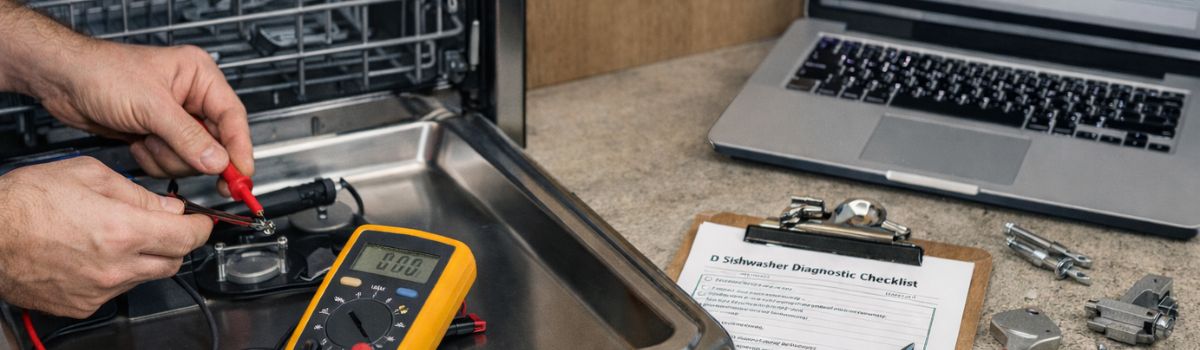
To further assess sensor functionality, diagnostic tools such as multimeters are used. These devices measure electrical continuity and resistance, helping to determine if a sensor is operating within its specified parameters.
Common Causes of Sensor Failures
Sensor failures in dishwashers often result from natural wear and tear due to regular usage. Over time, sensors can degrade, leading to inaccurate readings or complete failure.
Water quality and environmental factors in Nanaimo also contribute to sensor issues. Hard water deposits and mineral buildup can affect sensor performance, while humidity and temperature variations may cause corrosion or electrical faults.
Electrical and wiring problems are another frequent cause of sensor malfunction. Loose connections, damaged wires, or faulty control boards can disrupt sensor signals and trigger error codes.
Case Studies and Local Insights
Local service providers in Nanaimo report that sensor-related repairs commonly involve temperature sensors and water level sensors. For example, a frequent issue is the malfunction of temperature sensors due to mineral buildup in the region’s water supply, leading to inaccurate temperature readings and error codes.
Technicians in Nanaimo have also observed that addressing wiring issues promptly prevents more extensive damage and reduces recurring sensor errors, emphasizing the importance of comprehensive diagnostics in sensor repair.
Repair and Calibration Services in Nanaimo
Available Professional Services
In Nanaimo, several repair services offer same-day options for dishwasher sensor calibration and error code troubleshooting. These services prioritize quick response times to minimize your dishwasher downtime. Certified technicians familiar with a wide range of dishwasher brands and their specific error codes ensure accurate diagnosis and effective calibration. Their expertise helps prevent recurring issues and extends the lifespan of your appliance.
DIY vs Professional Calibration and Repair
While some minor dishwasher issues can be addressed with DIY methods, sensor calibration and error code repairs often require professional intervention. Attempting to recalibrate sensors or replace components without proper knowledge can lead to incorrect adjustments, worsening the problem or causing further damage. Professional technicians have the tools and training to handle these repairs safely and accurately.
Cost and Time Considerations
The cost of sensor calibration and repair in Nanaimo typically ranges depending on the dishwasher brand, the complexity of the error, and parts needed. On average, you can expect to pay between $100 to $300 for professional services. Repair times vary but same-day service is often available, with most calibrations and sensor repairs completed within a few hours. Scheduling in advance is recommended to secure prompt service.
Future Developments in Dishwasher Sensor Calibration
Innovations in Sensor Technology
The future of dishwasher sensor calibration is poised to benefit significantly from emerging sensor technologies. One key advancement is the development of sensors with self-calibration capabilities. These sensors can automatically adjust their measurements over time, reducing the need for manual calibration and minimizing errors caused by sensor drift or environmental changes.
Additionally, the integration of dishwasher sensors with smart home systems promises enhanced monitoring and control. This connectivity allows for real-time diagnostics and automated adjustments, ensuring optimal dishwasher performance and early detection of potential issues related to sensor malfunctions.
Advanced Calibration Models
Advanced calibration models are also shaping the future of sensor accuracy in dishwashers. One such example is the application of the Scare model, which offers improved on-device calibration techniques. This model enhances the precision of sensor readings by adapting calibration parameters dynamically, based on changing conditions and sensor behavior. Implementing these models directly within dishwasher systems can lead to more reliable error detection and fewer false alarms.
Environmental and Efficiency Impacts
Precise sensor calibration plays a critical role in promoting sustainable appliance usage. Accurate sensors help dishwashers operate more efficiently by optimizing water and energy consumption based on load size and soil levels. This optimization reduces waste and lowers the environmental footprint of dishwashing cycles. As sensor calibration technology advances, dishwashers will become smarter in managing resources, contributing to greener household appliances and helping consumers reduce their utility bills.
Conclusion
Sensor calibration plays a crucial role in accurately diagnosing and resolving dishwasher error codes. When sensors are properly calibrated, they provide reliable data that helps identify issues quickly, reducing downtime and preventing further damage. For homeowners in Nanaimo, regular maintenance and timely repairs are essential to keep dishwashers running efficiently and to avoid costly breakdowns.
Embracing new technologies in sensor calibration can significantly enhance dishwasher performance. Advanced sensors and smart diagnostic tools allow for more precise error detection and easier troubleshooting, ensuring that your dishwasher operates smoothly. Staying proactive with maintenance and leveraging these technological advancements will help extend the lifespan of your appliance and maintain optimal cleaning results.