
How Dishwasher Drainage Works: Internal Flow Explained
Inside Your Dishwasher: The Step-by-Step Drainage Flow Explained
Dishwashers aren’t just about blasting hot water and soap around. What makes them work is their ability to remove all the used, dirty water after the scrubbing’s done. If water just sat there, you’d be marinating your dishes in kitchen grime. Not ideal.
That’s where drainage comes in. It kicks off the moment the cleaning stops, sweeping away food bits, soap residue, and anything else you don’t want drying back onto your forks.
In this article, we’ll break down how all that happens inside the machine from the moment grease-heavy water pools at the bottom to when it disappears down the drain. No fluff, just a clear look at how the flow works and which parts pull their weight, including the two main types of dishwashers.
Step-by-Step Look at Dishwasher Drain Flow
Understanding how your dishwasher drains might not sound thrilling, but if you’ve ever opened the door to a swampy aftermath, you’ll appreciate knowing how water’s supposed to leave the building. Here’s the actual path dirty water takes once it’s done trying to clean up your leftovers.
Dirty Water Starts to Collect
After the jets blast your dishes with soapy water, all those messy food particles, grease, and detergent settle at the bottom of the tub. Think of it like a mini reservoir of used-up wash water. Before it goes anywhere, there’s usually a filter or mesh screen down there to catch the big gunk; no one wants chicken bones in the pipes.
Drain Pump Kicks In
When the cycle wraps up (or between certain stages), a small electric pump fires up. It’s not fancy, but it’s fast. The motorized pump pulls that water down and starts pushing it out. You won’t see it working, but you might hear it: a low hum followed by the sound of water moving out, like a polite exit.
Water Runs Through a Check Valve
As the water flows out, it hits a one-way door the check valve. This small component makes sure gravity or pressure doesn’t sneak dirty water back into the tub. It’s like a bouncer at the club: water exits only, no re-entry.
Drain Hose Routes Water Out
From the check valve, the water travels through a drain hose snaking out the back or underneath the machine. Depending on your setup, the hose might loop upward before it dives into your sink drain or garbage disposal. That loop isn’t just for fun it helps stop any backflow from your plumbing system.
Wastewater Is Released
Now on the final stretch, the used water empties into your kitchen’s drainage system either directly into the sink’s waste line or through the garbage disposal. From there, it’s out of your life and on its way to wherever gray water goes in your neighborhood. All of this happens quietly, behind the scenes, but it’s a critical part of the cleaning process. A hiccup here, and suddenly your dishwasher turns into an overpriced Tupperware bin.
Common Configurations
Not all dishwashers connect to drains the same way, but there are a few setups you’ll see again and again, based mostly on your local plumbing code and sometimes the installer’s preference.
1. Direct Sink Connection
Some dishwashers drain straight into the kitchen sink’s plumbing. The drain hose runs into a branch tailpiece just below the sink drain. Clean and simple. But without extra protection, there’s a risk of dirty sink water backing into the washer.
2. Garbage Disposal Hookup
This is a popular setup. The dishwasher’s drain hose connects to a small port on the side of the garbage disposal. When the pump kicks on, wastewater flows into the disposal chamber and from there into the main drain line. One heads-up if the disposal is new, that little port will still be capped. Don’t forget to knock it out or drainage won’t happen.
3. Air Gap Fitting
Required by code in some areas, mostly to prevent backflow. It’s a metal or plastic fixture mounted next to the faucet. Water from the dishwasher goes into the air gap, which vents air into the line before the water continues to the drain. It’s a bit of added plumbing, but it makes sure nothing gross flows back into your clean dishes.
4. High Loop Method
When air gaps aren’t required, installers often use a high loop instead. The drain hose is secured up high usually just beneath the countertop before dropping down to the drain. This loop reduces the chance of wastewater siphoning back into the dishwasher. It’s simple, needs no extra parts, and works as long as the loop stays secure and above the waterline.
Each method has the same end goal: get dirty water out and keep it gone. Which one your kitchen uses may depend on local rules or how your sink and disposal are set up. Either way, they all lean on gravity, pressure, and a little common sense.
Key Parts That Handle Drainage
At the heart of your dishwasher’s drainage system are a few tough, no-nonsense components that do all the dirty work. Here’s what’s really pulling its weight behind the scenes:
Drain Pump
This small but serious motor-driven unit moves used water out of the dishwasher. Once the cycle is done spraying and scrubbing, the pump kicks on and shoves water through the drain hose with quiet force. If there’s a problem here, nothing’s going anywhere.
Check Valve
Think of it as a one-way street sign. The check valve makes sure that nasty water, full of detergent and food debris, flows only one way out. It keeps used water from sneaking back into the clean zone.
Drain Hose
This hose is the plumbing link between your dishwasher and the rest of the house. It’s flexible, discreet, and runs under or behind the unit. Whether it’s connected to the sink drain or a garbage disposal, it’s the final ride for used water.
Filter
Situated at the base of the dishwasher, this is your first line of defense. It strains out chunks of leftover food before they can clog up the plumbing or damage the pump. Left unchecked, buildup here can slow everything down.
Air Gap (If You Have One)
Required in certain areas and optional in others, an air gap sits above the sink and prevents dirty water from siphoning backward into your dishwasher. If your machine doesn’t have one, it may rely on a high loop in the hose to serve a similar function.
Each of these parts does a single job and does it well. Keep ‘em clean, fitted right, and free of blockage, and your dishwasher won’t just clean it’ll keep itself clean too.
Signs the Drainage Isn’t Working
If you’re opening the dishwasher and water’s still sitting at the bottom like a forgotten soup, the drainage system might be failing. One clear sign: water pooling after a cycle. It’s not just annoying it’s unsanitary and means something isn’t right.
Another red flag? Dishes that come out looking suspiciously unclean. That could mean dirty water didn’t exit properly and ended up swirling back over your plates. Not great.
Funky smells creeping out of the machine? That’s likely standing water or gunk trapped somewhere in the system possibly in the filter or a backed-up drain hose.
Lastly, pay attention to any weird noises, like gurgling sounds in your kitchen sink while the dishwasher runs. That could mean the dishwasher is fighting against a blocked or sluggish household drain.
Catch these signs early, and you’ll save yourself a headache and possibly a repair bill.
What Usually Goes Wrong
For a machine that just sprays hot water, a lot can still jam up. Below are the most common causes of dishwasher drainage problems broken down by part and potential issue.
Clogged Filter
The filter sits low in the tub and catches food particles. But if you don’t clean it occasionally, it can clog kind of like a sink full of mashed potatoes.
What happens when it clogs:
- Wastewater backs up
- Dishes stay dirty
- A foul smell can build at the bottom of the tub
Blocked or Kinked Drain Hose
The drain hose is flexible but not invincible.
Common issues:
- Kinked hose restricts water flow
- Grease and food particles build up inside
- Reduced drainage leads to water pooling
Garbage Disposal Backup
Some dishwashers are hooked up to drain through a garbage disposal.
When this becomes a problem:
- The disposal gets clogged or filled
- Water from the dishwasher can’t drain properly
- Dirty water floods the bottom rack
Faulty Internal Parts
Don’t overlook what’s going on inside the machine.
Two key components:
- Drain Pump – If it’s worn out or malfunctioning, it can’t push water out effectively
- Check Valve – When it fails, it lets wastewater sneak back into the tub
Staying on Top of It
Keeping your dishwasher drainage in top shape doesn’t require a workshop manual or a lot of time just a few regular habits. First, don’t treat your dishwasher like a garbage disposal. Scrape off large food chunks before loading dishes. We’re not talking about a power wash just give it a quick scrape so the filter doesn’t get overloaded.
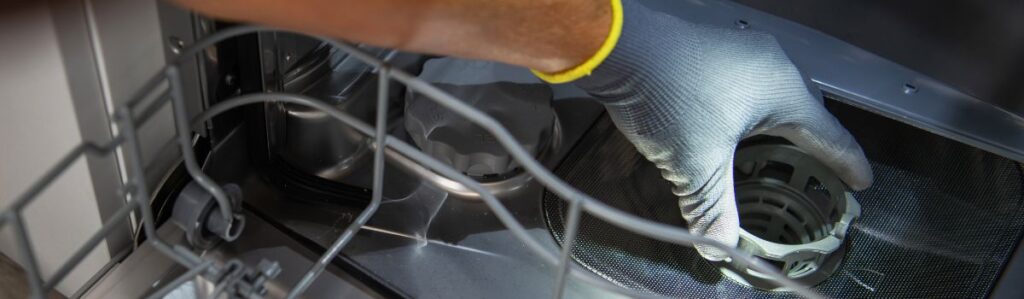
Speaking of the filter, check it. It’s often right under the lower spray arm. Twist it out, give it a good rinse, and put it back takes five minutes, tops. Do this every couple of weeks if you use your dishwasher regularly. Neglect it, and you’ll get standing water, funky smells, or both.
Next up: maintenance wash cycles. Grease and soap scum build up over time in places you can’t see. Running an empty cycle with a dishwasher cleaner once a month helps break that down and keeps things moving freely through the drain lines.
Finally, give the drain hose a quick look now and then. Make sure it’s not bent weirdly or shoved against the wall too hard. Any sharp kinks or folds can choke off drainage and back things up in a hurry.
Routine’s not glamorous, but it beats dealing with three inches of murky water and rewashing everything by hand.
Wrap-Up
Dishwasher drainage isn’t magic. It’s a smart, mechanical flow that dirty water travels down, gets forced out, and exits cleanly into your plumbing. A drain pump does the heavy lifting, a check valve keeps things one way, and the hose guides it home. That’s it.
When this system runs right, dishes come out spotless, and your kitchen stays mess-free. But if any piece clogs, kinks, or fails, the whole process limps. That’s why it pays to understand what’s going on under the hood. A quick filter rinse or hose check can save you from a flooded floor or a smelly machine.