
The Easy Way to Maintain Dishwasher Filters in Surrey Homes
Maintaining a clean dishwasher filter is essential for ensuring your dishwasher performs at its best and keeps your dishes hygienic. In Surrey homes, where busy lifestyles demand efficient appliances, a clogged or dirty filter can lead to several issues that affect both the cleanliness of your dishes and the longevity of your machine. Using tools for DIY repair can make this task easier and more manageable.
Common problems caused by dirty dishwasher filters include poor cleaning results, as food particles and debris prevent water from circulating properly. This can leave your dishes spotted or greasy after a wash. Additionally, a buildup of trapped food can cause unpleasant odors inside the dishwasher, making the kitchen environment less pleasant. Over time, neglecting the filter can also lead to potential damage to the dishwasher’s internal components, resulting in costly repairs or even the need for a replacement.
Regularly cleaning the dishwasher filter is a simple yet crucial step to avoid these problems and keep your appliance running smoothly.
Understanding Dishwasher Filters
Types of Dishwasher Filters
Dishwasher filters generally come in two types: manual filters and self-cleaning filters. Manual filters require regular cleaning by the user to remove trapped food particles and debris. On the other hand, self-cleaning filters use a grinding mechanism to break down food waste during the wash cycle, reducing the need for frequent manual cleaning.
To determine which type your dishwasher has, check the user manual or inspect the filter area inside your dishwasher. Consumer Reports advises looking for a removable filter screen at the bottom of the dishwasher tub; if it’s present and removable, you likely have a manual filter that needs periodic cleaning. If there is no removable filter or screen, your dishwasher probably has a self-cleaning system that uses a food grinder instead.
Components and Location
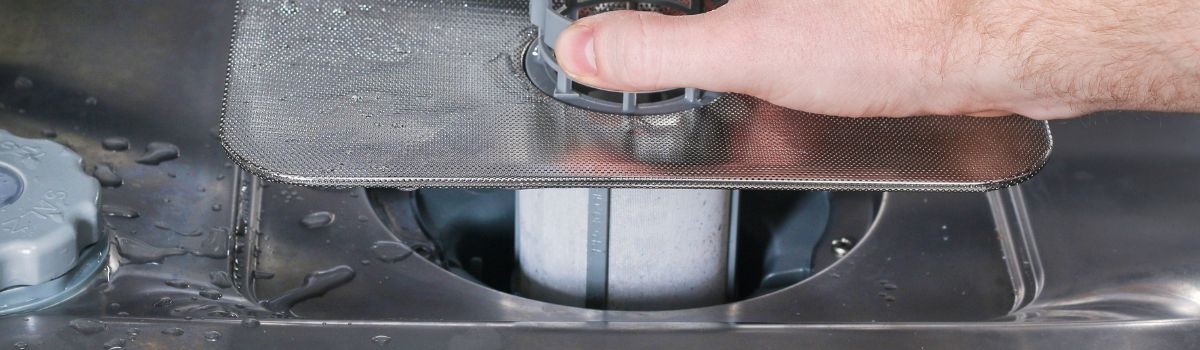
Dishwasher filters are typically located at the bottom of the dishwasher tub, beneath the lower spray arm. In many common models, you can find the filter by removing the dishwasher’s bottom rack and looking for a round or rectangular component covering the drain area.
A dishwasher filter assembly usually consists of three parts:
- Coarse filter: This part traps large food debris and prevents it from clogging the drain.
- Fine filter: It captures smaller particles to avoid them recirculating onto dishes.
- Microfilter: The finest mesh, which catches tiny food particles and sediments.
Together, these components work to keep your dishwasher running efficiently by preventing blockages and ensuring clean water circulates during each wash cycle.
Factors Influencing Cleaning Frequency in Surrey Homes
Several factors determine how often you should clean your dishwasher filter to keep your appliance running efficiently in Surrey homes.
Usage Frequency of the Dishwasher
If you use your dishwasher daily, the filter accumulates food particles and debris more quickly, requiring more frequent cleaning. Homes with less frequent dishwasher use can clean the filter less often.
Pre-Rinsing and Food Preparation Habits
Rinsing dishes before loading them into the dishwasher can reduce the amount of food residue trapped in the filter. However, heavy food preparation that leaves a lot of debris on dishes will increase filter clogging, necessitating more frequent maintenance.
Water Hardness in Surrey and Its Impact on Filter Clogging
Surrey’s water hardness affects mineral deposits inside the dishwasher. Hard water can cause limescale buildup, which may clog the filter faster and reduce cleaning efficiency. This means filters in areas with hard water might need cleaning more frequently to prevent blockages.
Age and Model of the Dishwasher
Older dishwasher models may have less efficient filtration systems or smaller filters, which can clog more quickly. Newer models often have improved self-cleaning features but still require regular manual filter cleaning based on usage.
Step-by-Step Guide to Cleaning Your Dishwasher Filter
Preparation
Before you start cleaning your dishwasher filter, gather the necessary tools: a soft brush, a sponge, warm soapy water, and a towel. For safety, it’s recommended to unplug the dishwasher or turn off the power to avoid any accidents while handling the filter.
Removing the Filter
Locate the dishwasher filter, typically found at the bottom of the dishwasher tub. To remove it safely, refer to your dishwasher’s manual or follow general instructions: usually, the filter can be unlocked by twisting or lifting it gently. Be careful not to damage the filter or any surrounding parts during removal (Abt).
Cleaning Process
Start by rinsing the filter under running water to wash away loose debris. Use a soft brush to scrub off any stubborn particles and grease that may be stuck on the filter surface. For a more thorough clean, wash the filter with warm soapy water using a sponge or scrub brush to remove accumulated grime.
Reinstalling the Filter
Once the filter is clean and dry, place it back into its original position in the dishwasher. Make sure it locks securely in place to ensure proper functioning of your dishwasher and to prevent any malfunctions during operation.
Additional Maintenance Tips for Surrey Homeowners
To keep your dishwasher running efficiently, it’s important to go beyond just cleaning the filter. Running an empty dishwasher cycle with white vinegar or a specialized dishwasher cleaner can help remove residual buildup inside the machine. This practice helps break down grease, grime, and mineral deposits that accumulate over time, ensuring a fresher and cleaner dishwasher.
In addition to the filter, regularly check the spray arms and drain area. Spray arms can get clogged with food particles or mineral deposits, which reduces water flow and cleaning performance. Make sure the spray arm holes are clear and that the arms can spin freely. Similarly, inspect the drain for any debris or blockages that could impede water drainage.
Establishing a regular maintenance schedule is key to preventing clogs and unpleasant odors in your dishwasher. Aim to clean the filter at least once a month, and perform a more thorough inspection of the spray arms and drains every few months. Consistent upkeep will extend the life of your dishwasher and keep it functioning at its best in your Surrey home.
Troubleshooting Common Dishwasher Filter Issues
A clogged or dirty dishwasher filter can significantly affect your dishwasher’s performance. Here are some common signs to watch for:
- Lingering food particles: If you notice bits of food left on your dishes after a wash cycle, the filter may be blocked and unable to trap debris effectively.
- Foul smells: A dirty filter can harbor trapped food and bacteria, leading to unpleasant odors inside your dishwasher.
- Poor cleaning results: When the filter is compromised, water circulation can be reduced, resulting in dishes that are not thoroughly cleaned.
If you encounter these issues, start by removing and cleaning the filter according to your dishwasher’s manual. Use warm water and a soft brush to clear away debris.
In cases where the filter is damaged or difficult to remove:
- Damaged filter: A cracked or torn filter should be replaced promptly. Continuing to use a damaged filter can allow debris to enter the dishwasher’s drainage system, potentially causing further issues.
- Difficult to remove: Sometimes filters can become stuck due to grime buildup or improper installation. Try soaking the filter area with warm, soapy water to loosen debris. Gently wiggle the filter while pulling it out, but avoid using excessive force to prevent damage.
If the filter remains stuck or you suspect damage, consider consulting a professional dishwasher service in Surrey to avoid causing further harm to your appliance.
Benefits of Regular Dishwasher Filter Cleaning
Regularly cleaning your dishwasher filter offers several important benefits that enhance the overall performance of your appliance.
Improved Cleaning Efficiency
A clean filter ensures that food particles and debris are effectively trapped, preventing them from redepositing on your dishes. This leads to better cleaning results and sparkling dishes after every wash.
Prevention of Unpleasant Odors
When filters become clogged, trapped food particles can start to decompose, causing unpleasant smells inside the dishwasher. Regular cleaning eliminates these residues and helps keep your dishwasher smelling fresh.
Prolonged Dishwasher Lifespan
Maintaining a clean filter reduces strain on the dishwasher’s components by allowing proper water circulation and drainage. This can help prevent malfunctions and extend the life of your appliance.
Energy and Water Savings Due to Optimal Operation
A clean filter allows the dishwasher to operate more efficiently, using less water and energy during each cycle. This not only lowers utility bills but also benefits the environment by reducing resource consumption.
Conclusion
Regularly cleaning your dishwasher filter is essential to maintain the appliance’s efficiency and ensure your dishes come out spotless. Over time, food particles and debris can clog the filter, leading to unpleasant odors, poor cleaning performance, and even potential damage to the dishwasher. Establishing a consistent maintenance routine tailored to your household’s usage will help prevent these issues and extend the life of your dishwasher. Depending on how often you run your dishwasher and the types of meals you prepare, adjusting the cleaning frequency can keep your filter in optimal condition. Prioritizing this simple task will save you time, money, and hassle in the long run.