
Washer Won’t Agitate
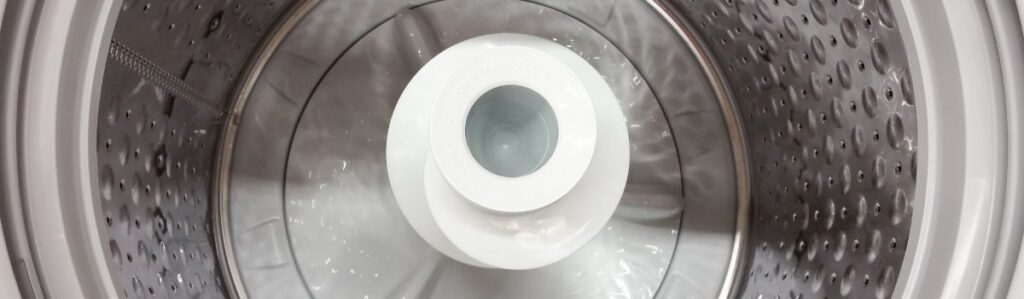
Why Your Washer Won’t Agitate – Common Causes and Easy Fixes
When your washer fills up but just sits there, dead silent or maybe humming faintly, you’re likely dealing with a failure in the agitation cycle. Agitation is what gets your clothes clean: the back-and-forth motion that moves water and detergent through fabric, loosening up dirt and grime. Without it, you’re soaking laundry in soapy water and hoping for the best.
Let’s get one thing straight early on. This is different from a washer that won’t spin. Spin happens at the end of the cycle to remove water from your clothes. Agitation happens earlier and is what does the real cleaning work. So, if your washer fills up and drains but your laundry still smells like last week’s gym class, it’s probably not agitating properly. If you’re not comfortable troubleshooting it yourself, many homeowners turn to professional washer repair services to get things working again.
Before we dive into diagnostics, here’s your quick PSA: Unplug the washer before opening things up. Water and electricity don’t mix, and you don’t want a small repair turning into a trip to the ER. You’ll want a Phillips screwdriver, maybe a socket wrench, and a flashlight. If you have a multimeter, even better, but it’s not essential for the basics.
Ready? Let’s start with the simple stuff.
Start with the Obvious
Before you grab a screwdriver or curse your washer into early retirement, check the simple stuff. Seriously, half of DIY fixes start with something small that got overlooked.
Check the Lid
Lid not closed right? That’ll kill the party. Most top-loaders have a lid switch that prevents the washer from agitating if the lid isn’t fully shut. It’s a safety feature nobody wants, spinning parts while fishing out a sock.
Here’s what to do:
- Open and close the lid firmly.
- Listen for a click that’s the switch engaging.
- Inspect for misaligned hinges or a broken lid that might prevent proper closure.
Check Your Cycle Settings
Not all cycles are created equal. Some wash modes are designed to move at all barely.
Watch out for settings like:
- Soak
- Delicate
- Eco mode (or anything with a tree icon)
Try switching to:
- Normal
- Heavy-duty
- Permanent press
This ensures the washer is told to agitate.
Inspect the Control Panel
Digital model acting weird? Your washer may be trying to talk to you, just not in English.
Look for:
- Blinking lights
- Cryptic error codes
- Beeping noises
Reset the control board:
- Unplug the washer
- Wait 10 to 20 seconds (longer if you’re superstitious)
- Plug it back in
If That Doesn’t Work…
If everything here checks out and your washer still refuses to move, then yeah, it’s time to roll up your sleeves and dig deeper. But never skip these basic checks; they’re often the gateway to solving the problem quickly without unnecessary effort.
Let me know if you’d like further formatting, want to add images, or use callout boxes for extra emphasis.
Inspect the Lid Switch (or Door Lock)
If your washer fills and then just sits there, with its eyes glazed over, as if it has forgotten what it was doing, the lid switch (or door lock on front-loaders) might be to blame.
The lid switch is a safety feature that tells the washer it’s safe to move parts. If it’s faulty, the machine won’t agitate even if everything else is fine. You can test this manually. On most top-load machines, there’s a small plastic switch where the lid meets the body. Open and close the lid slowly and listen for a soft click. No click? Could be dead.
If you have a multimeter and aren’t afraid to use it, unplug your washer and test the lid switch for continuity. No continuity means the switch isn’t completing the circuit and needs to be replaced. It’s a cheap part, and swapping it out is usually as simple as removing a couple of screws and wires.
On front-loaders, the mechanism is slightly more involved since the door lock system includes both the latch and a sensor. If the door doesn’t lock properly, the ignition won’t start. Some models have an error code that’ll tip you off, but others just leave you guessing. Either way, if your washer fills up but refuses to budge, this is one of the first components to rule out.
Check the Drive Belt
If your washer sounds like it’s working but the agitator isn’t moving, the drive belt could be to blame, especially on belt-driven models. This simple rubber loop connects the motor to the washer’s moving parts. When it wears out, loosens, or breaks, everything else might seem fine, but you’ll get zero agitation.
First, take a second to check for some tell-tale signs: any burning smell? Thudding during operation? Your washer fills with water, hums for a second, and then just sits there. These can all point toward a slipping or broken belt.
To inspect it, unplug the washer. No exceptions, it’s a tight spot with moving parts. Next, remove the back panel or lower access panel, depending on your washer’s design. You should be able to spot the belt wrapped around the motor pulley and the drive pulley.
Give it a stretch. If it feels slack, cracked, or glazed like an old rubber band, it’s time for a replacement. Even if it looks okay, small cracks or a shiny surface can mean it’s lost its grip. Belts are relatively inexpensive, and swapping one out usually just takes a socket wrench, a little patience, and a few YouTube videos.
No need to overcomplicate it if your drive belt is shot; your washer won’t agitate. It’s a straightforward fix that can bring your machine back to life.
Agitator Dogs or Cogs (for Top-Load Washers)
If your top-load washer sounds like it’s running but the agitator isn’t moving or it’s moving weakly or only in one direction, there’s a good chance the agitator dogs have worn out. These small, inexpensive plastic components are housed inside the top portion of the agitator and play a crucial role in its function.
What Do Agitator Dogs Do?
Agitator dogs:
- Grip in one direction and release in the other
- Help create the back-and-forth scrubbing motion characteristic of a working agitator
When they fail, you may notice:
- The agitator is not moving at all
- Movement only in one direction
- A weak or inefficient wash cycle
The Good News
This is one of the most common and easily fixable issues in older top-load washing machines.
Step-by-Step Replacement Guide
Remove Dispenser & Cap
- Pop off the fabric softener dispenser by hand
- Use a flathead screwdriver to pry off the plastic cap underneath
Access the Agitator
- Use a socket wrench to remove the bolt holding the agitator in place
- Pull the agitator out with a bit of effort
Inspect the Cogs
- Check the agitator dogs inside the upper portion
- Look for signs of wear: cracked, smooth, or missing teeth
Replace the Dogs
- Purchase a replacement kit (typically under $10)
- No special tools needed, just a screwdriver and a clean towel for drips
- Install new dogs and reassemble the agitator
Motor Coupler (in Some Models)
If you’ve checked the obvious culprits and your top-load washer, particularly a Whirlpool or Kenmore, still won’t agitate, it’s time to look at the motor coupler. This little part does a big job: it connects the washer’s motor to the transmission. When it breaks, the motor runs but can’t transfer power to the agitator. Translation: a whole lot of humming and zero movement.
Common signs your motor coupler’s shot:
- Washer fills and hums but won’t agitate or spin
- You might hear a faint grinding or buzzing
- In some cases, you’ll smell burnt rubber or plastic, never a good sign
The good news? It’s a relatively inexpensive part, and you don’t need to disassemble the whole motor to check it. Here’s how you get in:
- Unplug the washer seriously, don’t skip this.
- Pull it away from the wall and remove the control panel screws (usually at the back or front corners).
- Tilt the cabinet back or lift the front panel off, depending on your model.
- Locate the motor underneath the tub; it is usually held in place by two clips.
- The coupler sits between the motor and the transmission. It looks like a small, round plastic or rubber disc with prongs.
- If it’s cracked, chewed up, or looks like it exploded in place? It’s toast.
You’ll need a replacement motor coupler and maybe a flathead screwdriver to swap parts. Helpful tip: Buy the OEM (original equipment manufacturer) version. Knockoffs can wear out fast.
Fixing this is a straightforward mechanical task, with no wiring or programming required. If you’re handy with IKEA furniture or chaining a bike, you’ve got the skill for this. Just keep your hands clear of sharp edges and the motor frame.
Control Board or Timer Issues
If everything else checks out, the lid switch works, the belt is intact, and the agitator dogs are fine, it’s time to look at the brain: the control board or the timer.
The control board (in digital models) or the mechanical timer (in older ones) sends signals to start and stop different parts of the wash cycle. This includes telling the motor when to kick off agitation. If that signal never gets sent, your washer just sits there, full of water, humming or doing nothing at all.
Unfortunately, this isn’t always an easy thing to diagnose. Unlike a broken belt or a switch that doesn’t click, control issues can be subtle. If your washer skips or hangs up on multiple cycles, not just during agitation, it’s a strong clue that something is off with the electronics. You might also notice odd behavior like stuck timer knobs, cycles that restart randomly, or a washer that never moves past the soak phase.
Testing a timer or board typically means using a multimeter and a wiring diagram. If that sentence made your eyes glaze over, this might be the point where calling in a pro makes sense. These parts aren’t cheap, either, so it’s worth getting a clear diagnosis before dropping money on a replacement.
Clutch and Transmission Problems
If your washer spins just fine but refuses to agitate, and you’ve already crossed off the usual suspects, it’s time to look deeper namely, at the clutch and transmission. These components are more common in older, top-loading washers with mechanical parts rather than digital brains.
Start with the clutch. This part connects the transmission to the spinning drum and can also affect agitation. When the clutch is worn out, the washer might sound like it’s working during the agitation cycle, but the clothes just sit in water, untouched. You might hear a whining or scraping noise like metal gently protesting.
Transmission issues are rarer but not unheard of. The transmission is what translates the motor’s energy into the twisting motion that drives the agitator. If it’s failing, you’ll often notice a buildup of signs: your washer may occasionally struggle to switch cycles, make weird grinding noises, or take longer and longer to do its job. Total failure, with no agitation at all, is usually the final stage.
This is where we tiptoe into the ‘call a pro’ territory. Accessing or replacing the clutch can be done with patience and moderate mechanical skill, but the transmission is trickier. It’s deeply embedded in the machine and heavy. You’ll need to disassemble a good chunk of your washer just to get to it, and then what? Rebuild or replace a part that might cost as much as a new machine?
So here’s the bottom line: if clutch or transmission trouble is on your radar, weigh the age and value of your washer. Consider how far you’re willing to go down what could turn into a full-blown repair project. Sometimes, knowing when to stop is just as smart as knowing where to start.
Agitator vs. Impeller Washers
Before diving into repairs, start with a simple question:
What kind of top-load washer do you have?
Most fall into one of two categories agitator or impeller, and understanding the difference can help you diagnose issues more effectively.
Agitator Washers
Key Characteristics:
- Include a tall central post (the agitator) in the drum
- The central column twists back and forth with visible force
Common Signs of a Problem: No movement in the agitator could indicate:
- Worn agitator dogs
- Broken motor coupler
- Loose or damaged drive belt
- Faulty lid switch
These are typically mechanical issues, covered in detail in other sections of this guide.
Impeller Washers
Key Characteristics:
- No central post; instead, a low-profile rotating plate sits at the bottom
- Agitates by rapid, subtle movements designed to create turbulent water currents
- May appear inactive to the untrained eye
When to Be Concerned:
- If laundry isn’t moving, the machine may not be agitating or it might be, just very quietly
- Problems are more likely electronic, such as: Malfunctioning control board, Faulty sensors, Software glitches
Final Takeaway: Know Your Washer
Identifying your washer type helps determine:
- Whether the issue is likely mechanical or electronic
- If your machine should be loud and obvious or quiet and subtle during agitation
Before you start pulling panels or ordering parts:
- Confirm your washer type
- Observe its behavior closely
- Consult the appropriate diagnostic steps based on the model
Understanding the basics now can save time and frustration later.
Red Flags You’re Dealing With a Bigger Problem
When a washer moves from acting weird to flat-out misbehaving, you may be edging beyond minor repair territory. This is where things start getting pricey or at least more complicated. If your washer filled with water but then fell flat on its face and stayed silent, you might be dealing with a serious failure.
Warning Signs to Take Seriously
Be on the lookout for these major red flags. They usually indicate problems that go well beyond a simple DIY fix:
Burning Smells or Visible Smoke
- What it means: Likely an electrical issue.
- What to do: Cut the power immediately. This could be anything from a failed motor to a potential fire hazard.
Sparks or Electrical Shorts
- What it means: Sparks behind the control panel or inside the machine signal major electrical trouble.
- What to do: Unplug the washer right away. This is not DIY territory anymore.
Loud Grinding or Metal-on-Metal Sounds
- What it means: Could be worn gears, a failing basket drive, or even transmission problems.
- What to do: Stop using the machine. Continuing to run a cycle can lead to more costly damage.
Completely Unresponsive After Filling
- What it means: Possibly a failed control board or a busted motor.
- What to do: This is beyond a quick part swap time to consult a professional.
Water Leaking During Agitation + Mechanical Noises
- What it means: A combination of leaks and clunks usually points to multiple component failures, such as a worn clutch, a broken drive shaft, or damaged tub seals.
- What to do: These are not $12 hardware store fixes. Brace for a bigger repair (or replacement).
Wrapping It Up
If your washer fills but refuses to agitate, don’t panic or start budgeting for a new one just yet. In most cases, the issue boils down to a few usual suspects: a faulty lid switch, a loose or broken drive belt, worn agitator dogs, or a busted motor coupler. Each of these can be checked with basic tools and a little patience.
Start where it’s simplest. Make sure the lid shuts properly, the settings make sense, and there’s no obvious power issue. Then, move on to the hardware check: check the belt, peek inside the agitator, and give the lid switch a listen. You don’t need to be a pro to do these first steps. Just unplug, stay safe, and take your time.
If you hit a wall or the fix is beyond your comfort zone, such as electrical work or internal parts like the transmission, it’s okay to call in backup. Weigh the costs, effort, and age of your machine before deciding if it’s worth repairing. Sometimes, all it takes is a $10 part and a few hours. Other times, it’s better to let it go.